
What Is The Article About?
Is rust proofing still worth it if your older car already has some surface rust? The answer depends less on the vehicle’s age and more on the condition and extent of the existing corrosion. This article discusses whether car rust proofing can help older vehicles with existing surface rust, what to check before treatment, and when professional rust repair may be necessary.
When an Older Car Already Has Rust
Finding rust on an older car can be frustrating, especially when the vehicle is otherwise running well, and you plan to keep it for several more years. You may notice a small patch around a wheel arch, bubbling near a paint chip, or a few rusty areas underneath the vehicle after another Canadian winter. Naturally, the next question is whether car rust proofing can still make a difference once rust has already appeared. In many cases, surface rust does not mean it is too late to protect the vehicle. However, rust proofing is not a rust-removal treatment, and it cannot restore metal that has already been seriously damaged. Understanding the condition of the rust is the first step in deciding what your vehicle actually needs.
Surface Rust vs. Serious Corrosion
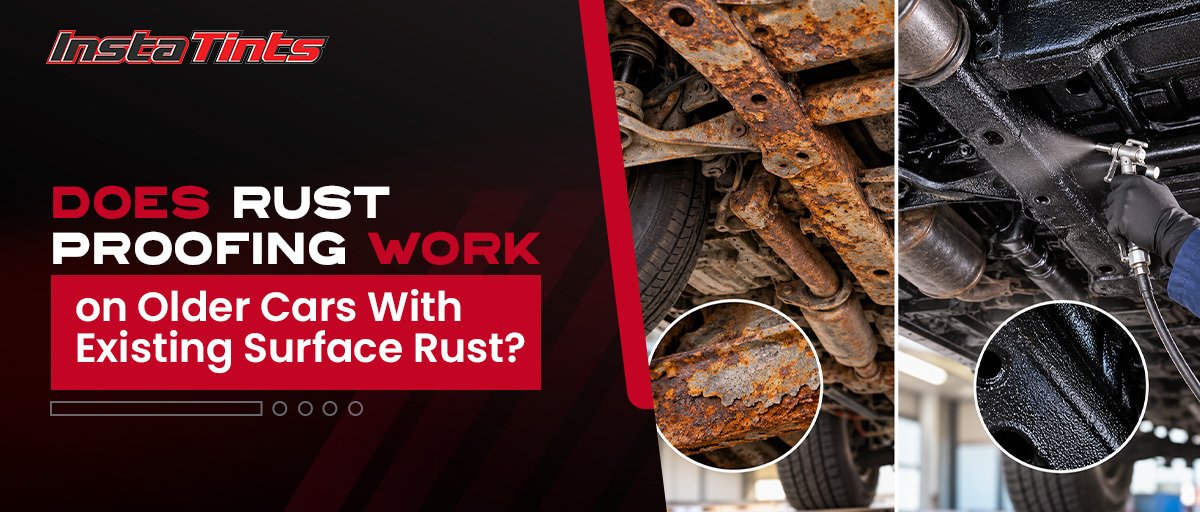
Not all rust indicates the same level of damage. Surface rust generally affects the outer layer of metal and may appear as light orange or brown discolouration. It can develop around paint chips, exposed edges, wheel arches, seams, and other areas where moisture and contaminants can reach the metal. However, more advanced corrosion can look very different, with bubbling paint, heavy scaling, deep pitting, holes, or visibly weakened metal. These signs mean these areas may require proper repair. Simply covering them with a protective product won’t work. This distinction matters because car rust proofing is designed to help protect suitable car surfaces from further exposure to moisture and corrosive contaminants. It should not be treated as a replacement for repairing metal that has already deteriorated.
Preparation Matters More Than You Might Think
Proper preparation is an important part of protecting an older vehicle. Before a car rust proofing treatment, the vehicle should be inspected to identify existing corrosion and vulnerable areas. If there’s dirt, salt, moisture, and other contaminants, they should be addressed first so the appropriate protection can be applied properly later. This is especially relevant with older vehicles because not every rust problem is immediately visible. Moisture and road salt can collect around seams, wheel wells, rocker panels, underbody components, and other less accessible areas. If an inspection shows that an area needs repair, it should be dealt with first rather than simply applying rust protection over serious corrosion.
Why Ontario Winters Can Be Hard on Older Vehicles
An older car has had more time to experience the conditions that contribute to corrosion. In Ontario, winter can add another layer of concern through snow, slush, moisture, road salt, and repeated freezing and thawing. Road salt is particularly relevant because it can remain on the vehicle and underbody during winter driving. If moisture and salt collect around vulnerable areas, corrosion can gradually develop or become more extensive. Whether you drive regularly in Toronto, Mississauga, Brampton, Scarborough, or London, Ontario, winter exposure is always a big factor. So, you should watch for early signs of rust instead of waiting until the damage is obvious.
When Rust Proofing Can Still Be Worthwhile
The age of the vehicle alone does not determine whether rust proofing makes sense. An older car that is mechanically sound, regularly maintained, and expected to stay on the road for several more years may still benefit from additional corrosion protection. Rust proofing may be worth considering when existing rust is limited, the underlying metal remains in reasonable condition, and the vehicle is regularly exposed to winter driving. It can also make sense when you have noticed early corrosion and want to take action before it develops into a larger repair. On the other hand, extensive corrosion, structural damage, or severely weakened metal requires a different approach. In those situations, rust proofing alone cannot solve the underlying problem.
Keep Rust From Becoming a Bigger Problem
Rust protection alone cannot be a one-time solution that can keep your vehicle in good condition. It should be a part of other measures taken in a systematic vehicle-care routine. Washing away accumulated road salt and grime during winter can help, while repairing scratches and paint chips can reduce opportunities for moisture to reach exposed metal. It is also worth paying attention to changes in areas that have already shown signs of corrosion. A small patch that begins spreading, bubbling, or flaking deserves attention before the problem becomes more difficult and expensive to address. For older vehicles, the goal is simple: identify corrosion early, deal with existing damage appropriately, and protect sound metal before the problem gets worse.
Give Your Older Vehicle the Protection It Needs
Rustproofing works best as part of an ongoing approach to vehicle care. Regular washing can help remove road salt and grime, while addressing scratches, paint chips, and early rust can help prevent small problems from becoming more serious. If your older vehicle already has surface rust, don’t assume that it is too late. Have the condition assessed first, then choose the protection that makes sense for your vehicle.
For professional car rust proofing in Ontario, turn to Insta Tints Canada. Whether you’re looking for rust proofing in Mississauga, Brampton, Toronto, Scarborough, or London, Ontario, our team can assess your vehicle and help you take the right next step. Book your rust proofing service with Insta Tints Canada today and give your vehicle a better chance of getting through the next Canadian winter protected.
Frequently Asked Questions
Q1. Can you rust proof a car that already has surface rust?
A: Yes, depending on the condition of the vehicle. Minor surface rust may still allow for protective treatment, while deeper corrosion may require repair first.
Q2. Does rust proofing remove existing rust?
A: No. Rust proofing is intended to help protect suitable areas from further corrosion. It does not repair or restore severely rust-damaged metal.
Q3. Is rust proofing worth it for an older car?
A: It can be worthwhile if the vehicle is otherwise in good condition, you plan to keep it, and the existing rust has not caused significant metal damage.
Q4. Should existing rust be checked before rust proofing?
A: Yes. An assessment can help determine whether the rust is superficial or whether repairs are needed before protective treatment.
Q5. Why is rust a concern for cars in Ontario?
A: Winter exposure to road salt, moisture, snow, and slush can contribute to corrosion, particularly around exposed and difficult-to-reach areas of a vehicle.