
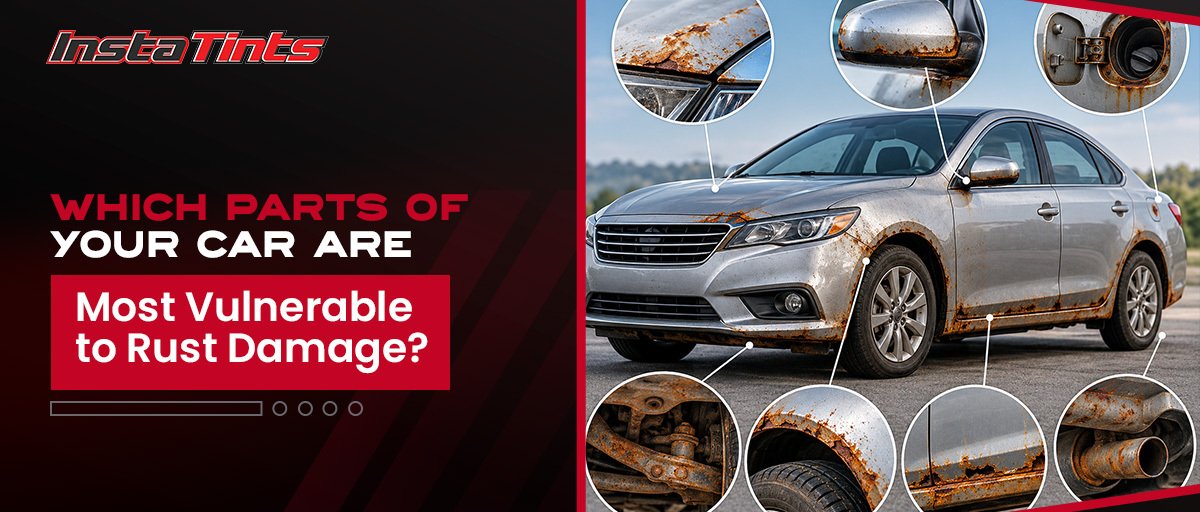
What’s the article about? This section explains which vehicle parts are most prone to rust, how Ontario’s winter road salt and moisture contribute to corrosion, and when car owners should consider professional rustproofing.
If you think otherwise, rust doesn’t usually appear overnight! It occurs when metal is repeatedly exposed to moisture, road salt, dirt, and oxygen, making certain parts of a vehicle more sensitive than others. Winter road salt and slush increase corrosion, especially on the vehicle’s underside. Therefore, regular inspection is important for Ontario drivers.
Knowing where rust begins can actually help you detect problems sooner and decide whether car rust proofing is right for your vehicle.
Which Car Parts Are Most Sensitive to Rust?
- Undercarriage & Frame
The underbody is frequently exposed to water, salt, gravel, and road debris. When contaminants remain trapped underneath the vehicle, corrosion can develop on the frame, subframe, crossmembers, and other exposed metal components. Because these areas are difficult to see during a regular wash, an underbody check is necessary.
- Wheel Wells and Fenders
Wheel wells collect moisture, mud, salt, and debris released by the tires. The edges of fenders can also trap contaminants, creating conditions for rust to develop. Drivers considering rust proofing Mississauga or other GTA services should pay close attention to these areas after the winter.
- Rocker Panels and Door Edges
Rocker panels are low on the vehicle and exposed to water and road spray. Dirt and moisture can pile up in door seams, lower edges, and drain areas, leaving them prone. Small paint chips can expose bare metal, allowing rust to start beneath the surface finish.
Why is the Underside Important for Car Rust Proofing?
Honestly, the underside is constantly exposed more, but gets less attention as compared with the outer body. Road salt can remain on metal surfaces after winter driving, and moisture can soak up around seams, brackets, and enclosed sections.
Insta Tints Canada’s professional car rust proofing focuses on sensitive parts rather than simply applying a product everywhere. Even in this, the correct process is determined by the vehicle’s age, condition, existing corrosion, and the product used.
How Does Ontario’s Weather Affect Rust?
Vehicles in Ontario are exposed to moisture on a regular basis due to freeze-thaw cycles. Winter road salt worsens the situation by contributing to the preservation of corrosion-prone conditions.
This is why searches for rust proofing Brampton, rust proofing Toronto, and rust proofing Scarborough are especially useful before or during the winter season. Car owners can benefit from regular inspections, especially after winter road treatment.
When Should You Consider Rustproofing?
Rust prevention is comparatively easier than dealing with advanced corrosion. Consider getting an inspection at Insta Tints Canada if you notice bubbling paint, brown spots, flaking metal, or corrosion around the wheel arches, doors, or underneath the vehicle.
For rust proofing London, Ontario or other local services, inquire about the areas to be treated, how existing rust will be assessed, and whether the product is suitable for your vehicle.
Protect Your Vehicle Before Rust Spreads
The first step toward rust neutralizer is raising awareness. Regular washing, especially underneath the vehicle after winter driving, early detection of paint damage, and proper rust protection can all help to reduce damage risks.
A professional inspection can assess which areas require attention and whether car rust proofing is best suited for your vehicle.
FAQs
- What car parts are most likely to rust?
The undercarriage, frame, wheel wells, fenders, rocker panels, and door edges are prone to erosion, salt, and road debris.
- Why does road salt cause rust in cars?
Road salt can speed up corrosion by allowing moisture to remain effective against exposed metal, particularly during Ontario winters.
- Should I rust-proof my car’s undercarriage?
It may be worth considering, especially for vehicles that are frequently driven through winter conditions. An inspection can help to decide whether the protection is appropriate.
- How do I know if my car is starting to rust?
Look for bubbling or chipped paint, brown spots, flaking metal, and visible corrosion near the wheel arches, doors, and under the vehicle.
- When is the ideal time to consider rustproofing?
Before or around the start of winter is a good time to have the vehicle inspected and determine if rust protection is required.