
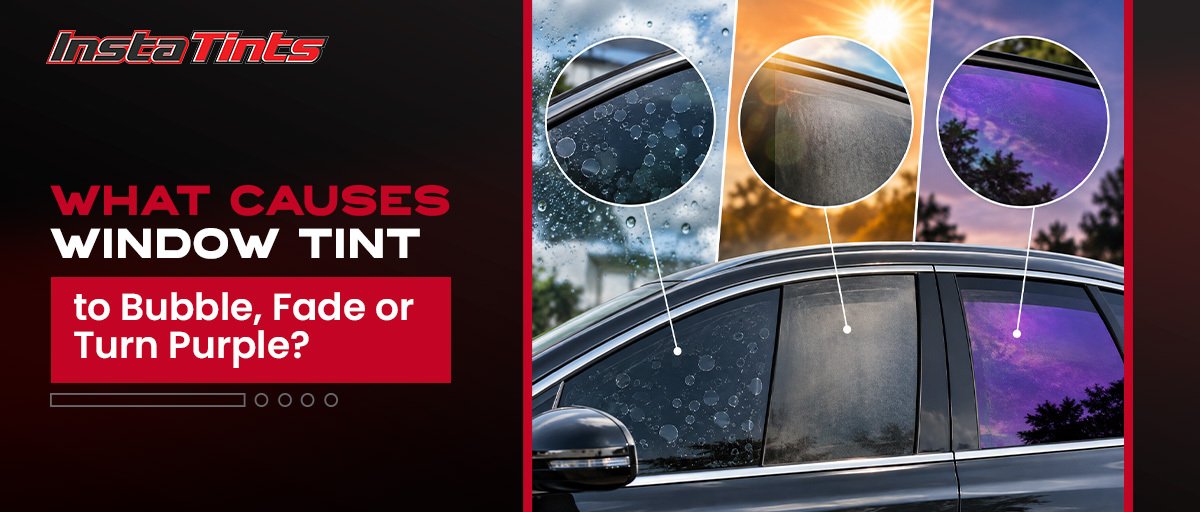
What’s the article about? This article discusses the most common reasons why window tint bubbles, fades, peels, or turns purple. It also outlines why and when professional replacement is the best option.
Window tint is the evolution of vehicles that meets all of a car owner’s needs. Well, not all, but the most important ones. From privacy to reducing glare, window tint is the one. But it is a film, and it can bubble, peel, or turn purple, whatever the reason may be. So, if you notice the issues, the problem doesn’t really lie in your car or the weather, but in the film. It is extremely important to know about the film quality, UV exposure, heat, adhesive breakdown, and installation.
Therefore, knowing why and how tint fails can help you identify problems if they occur in the future or have happened in the past and professionally cure them with Insta Tints Canada.
Why Does Window Tint Bubble?
Tiny bubbles appear immediately after installation and are not always a problem. Window film is installed with a solution that may leave moisture between the film and the glass. As the tint solidifies, the moisture slowly evaporates.
However, bubbles that appear months or years after installation are usually a sign of adhesive failure. Poor glass preparation, contamination during installation, ageing adhesive, excessive heat, and UV exposure can all weaken the bond between the film and the glass.
So, car owners who are considering window tinting Hamilton should prioritize professional surface preparation and installation because the film must endure repeated seasonal temperature changes.
Why Does Car Window Tint Fade?
Fading occurs when the materials responsible for the film’s colour gradually decrease. UV radiation from sunlight is a huge factor, especially for older or lower-quality dyed films. Heat can speed up material damage over time.
If your tint has become thinner or uneven, cleaning won’t be able to restore its original colour as the film itself may have weakened. This is something to consider when looking for studios offering window tinting Mississauga options. Always ask about the type of film being installed and how its construction is designed to survive long-term sun exposure.
Why Do Window Tints Turn Purple?
A purple or violet tint is commonly associated with dyed window film that has undergone UV-induced colour deterioration. But mostly, it is because different dye components degrade at different rates. The original neutral or dark appearance sometimes shifts toward purple.
This is a sign that the film is aging rather than a surface stain that can be easily cleaned off. When some colour degradation has already occurred, replacing the film is actually the most practical solution.
Can Bubbling or Purple Tint be Fixed?
Normally, damaged tint cannot be restored with a cleaner or DIY repair. If the adhesive fails or the film becomes noticeably stained, professional removal and replacement are actually needed. Furthermore, aggressive removal of the old film may leave adhesive behind and damage delicate rear-window defroster components.
If you’re looking for car tinting Brampton or window tinting London, Ontario, Insta Tints Canada is your partner who will professionally installed can help reduce premature bubbling, fading, and colour changes.
How Can You Prevent Window Tint Issues?
First and foremost, start with a reputable film, professional installation, proper glass preparation, and appropriate aftercare, all of which are available from Insta Tints Canada. Avoid using harsh cleaners, which can damage the film’s surface. Most importantly, don’t pass judgment on fresh tint too quickly.
Some initial haze or small moisture pockets may be caused by the curing process itself. If bubbles continue to grow, edges begin to lift, or your tint turns purple, you should have the film inspected rather than attempting to repair it yourself.
So, are you ready to keep your tint looking clean and clear with professional window tinting from Insta Tints Canada? Book your consultation today.
FAQs
- Why do window tints bubble?
Tints can bubble if moisture remains trapped during curing or the adhesive begins to fail.
- Why do car tints fade?
UV exposure, heat, aging, and low-quality film can all cause window tint to fade over time.
- Why does the window tint turn purple?
UV degradation of dyes in older dyed window films is the most common cause of purple tint.
- Can a bubbled window tint be repaired?
Professional removal and replacement is usually required for tint that has bubbled or peeled significantly.
- How do I keep window tint from fading?
Choose high-quality film, have it professionally installed, and follow the recommended cleaning and aftercare procedures.