
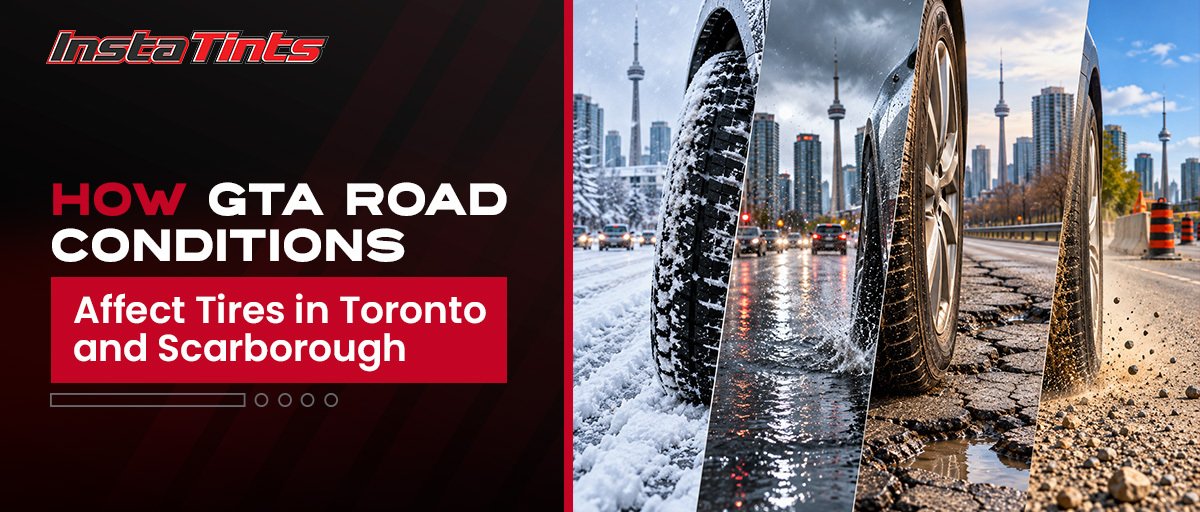
What is the article about? Most drivers underestimate how much tire damage GTA roads cause. This article explains how unique road conditions in Toronto and Scarborough affect tires, and what you can do to prevent further damage.
The GTA is one of Canada’s busiest driving environments and one of the most demanding on tires. Potholes that arise overnight, construction diversions that add miles, roadway surfaces worn down by traffic, and winters that alternate between freeze and thaw many times throughout the season. Tires here work harder than most drivers realize, and they wear faster than the manufacturer anticipates under normal conditions.
Understanding what’s going on with the tires makes it easy to schedule a seasonal tire change or a tire change service on time.
Potholes: The Most Immediate Threat
Potholes grow quicker on Toronto and Scarborough roadways than in most other Canadian cities. Asphalt cracks often throughout the winter due to freeze-thaw cycles. Traffic prevents repair crews from keeping up. The end effect is road surfaces that constantly punish tires and rims from November to April.
A strong pothole impact does numerous things at once. It may throw a wheel off balance, distort a rim at the bead seat, damage a tire’s internal belt structure, and cause sidewall bulging that isn’t always obvious. Any of these factors influence how the tire behaves. Together, they increase wear and create safety hazards that may not become apparent until something breaks.
Drivers who frequently use routes through Scarborough’s industrial regions or Toronto’s downtown core face pothole danger that requires post-winter tire inspection before summer driving starts.
Highway Volume and Sustained Speed
The 401, Gardiner, and DVP provide persistent high-speed driving conditions that increase tread wear in ways different from city driving. Highway driving at a regular pace exerts constant strain on the tire’s contact patch. Heat builds up. The compound wears down. Tread depth that was good at the start of a lengthy highway season can change dramatically by the end.
Tread wear increases more quickly in Scarborough commuters who use the 401 on a regular basis than in urban drivers who make shorter, slower excursions. A seasonal tire change, which installs tires with questionable tread depth before the start of a highway-heavy season, is a tire replacement appointment before the season finishes.
Winter Road Salt and Chemical Deicers
During the winter, Ontario utilizes a lot of road salt and calcium chloride-based deicers. Both are corrosive. Both indirectly affect tires through rim corrosion, braking components, and suspension parts, but prolonged exposure also deteriorates tire rubber over time.
The bead region where the tire seals with the rim is very sensitive. Salt and de-icer waste collect there, hastening corrosion on the rim surface. When rust hinders a good seal, sluggish air loss throughout the winter season results in under-inflation, which most drivers do not associate with the cause.
A winter tire change service that includes a bead seat check and cleaning before installation addresses this immediately.
Construction Zones
The Greater Toronto Area has maintained year-round development activity along important roads. Construction zones bring unique tire risks, including trash on the road surface, temporary pavement transitions that cause impact stress, metal plates with edges that damage tire sidewalls when they come into contact, and decreased lane widths that drive tires closer to curbs and obstacles.
Most drivers underestimate how often construction zone barriers cause sidewall contact damage. It may not cause immediate collapse, but it weakens the structure in ways that make it vulnerable to future stress.
How GTA Conditions Affect Different Tire Types
| Condition | Summer Tires | Winter Tires | All-Season Tires |
| Potholes | Moderate impact resistance | Good flexibility, better absorption | Moderate |
| Highway sustained speed | Excellent | Accelerated wear in heat | Moderate |
| Winter road salt | Adequate | Designed for exposure | Adequate |
| Freeze-thaw cycles | Hardens below 7°C, loses grip | Maintains flexibility | Partial flexibility |
| Construction debris | Moderate sidewall resistance | Moderate | Moderate |
| Wet roads | Excellent | Good | Moderate |
| Black ice | Poor | Designed for it | Poor to moderate |
The chart explains why seasonal tire change matters more in the GTA than in low-demand locations. Running summer tires in freeze-thaw conditions or winter tires in GTA heat creates performance differences that local road conditions readily exploit.
Uneven Wear From GTA Stop-and-Go
Stop-and-go traffic along Scarborough’s and Toronto’s main roads generates a distinct wear pattern. Repeated braking and accelerating focuses strain on the front tires in a different manner than steady interstate travel. Front tires wear quicker in stop-and-go situations. The rear tires wear differently. Without frequent rotation, the wear imbalance worsens during the season, until one axle is much more worn than the other.
Tire rotation during a seasonal tire change procedure is a natural corrective. It uniformly distributes wear across all four tires, extending the set’s usable life.
When to Act on GTA Tire Damage?
Seasonal tire change is an ideal time to check for any damage that occurred over the previous season. A winter tire change in Toronto or Scarborough scheduled in October should include a condition inspection of the winter tires before installation, as well as an evaluation of the summer tires before storage. Consider both directions.
A post-winter check in the spring detects pothole damage, sidewall concerns, and rim corrosion before summer driving starts. A pre-winter check in the fall ensures winter tires are ready to withstand the challenges GTA roads will throw at them from November to April.
Tire change in Scarborough and Toronto from Insta Tints Canada includes a comprehensive quality inspection of each tire before installation. Come in before the seasonal rush and leave knowing that the tires on your vehicle are ready for all the GTA roadways have to offer.
FAQs
1. How do GTA potholes affect tires specifically?
Pothole hits may bend rims, damage the internal belt structure, create sidewall bulging, and throw wheels out of balance. Not all damage is immediately obvious; a post-impact inspection can detect problems before they cause breakdowns.
2. Does highway driving degrade tires more quickly than city driving?
Different, rather than just faster. Highway driving provides prolonged heat and a regular load, which wears the contact patch evenly. Stop-and-go causes more concentrated wear from braking and accelerating.
3. How can road salt influence tire quality?
Salt builds up at the bead seat where the tire contacts the rim, speeding corrosion and preventing a good seal, resulting in gradual air loss throughout the winter.
4. How often should GTA drivers replace their tires?
Every 8,000 to 10,000 km, or after each seasonal tire replacement. GTA stop-and-go circumstances cause front-rear wear imbalance to develop more quickly than under normal driving conditions.
5. When should I schedule my seasonal tire replacement in Toronto or Scarborough?
The winter transition occurs in early to mid-October. Early March marks the start of spring. Book both appointments before the festive rush fills appointment availability at GTA retailers.