
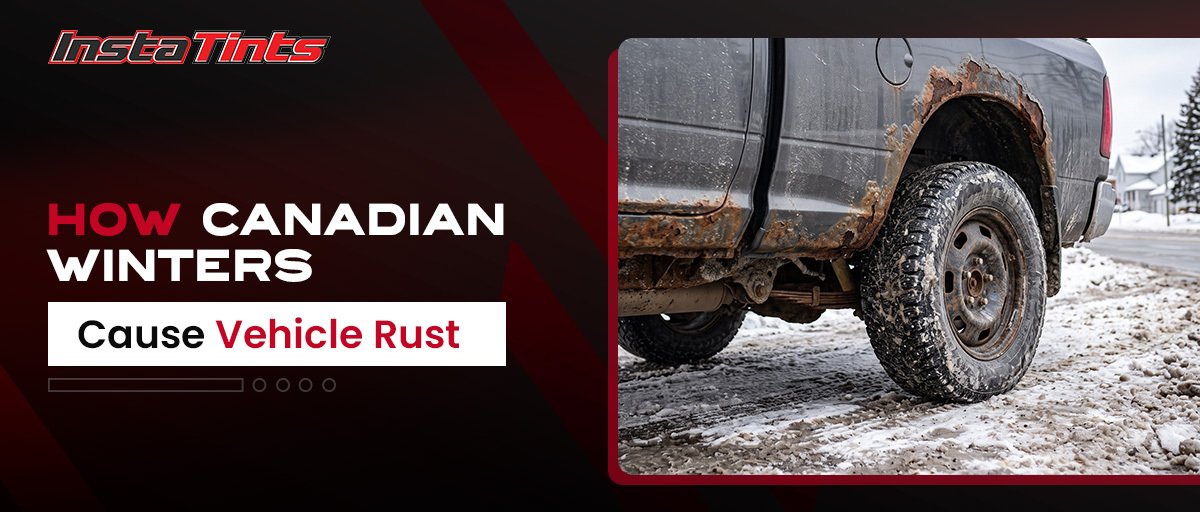
What is the article about? Rust doesn’t just emerge overnight. It develops silently during every Ontario winter until the harm can no longer be ignored. That is precisely what occurs and what prevents it.
Most drivers detect corrosion only after it’s evident. A bubble beneath the paint near a rocker panel. A brown edge appears on the bottom of the door. By then, the harm underlying is nearly always farther developed than what is visible on the surface. Once you understand how rust really develops, it becomes easier to stop it before it gets to that point.
What Is Rust In Cars?
Iron oxide is rust. When oxygen and moisture are present at the same time, they trigger a chemical reaction that degrades the metal over time. This process is gradual at first, but speeds up as the rust spreads. This is because damaged metal is more porous than unbroken metal, so moisture can get in deeper and faster as oxidation proceeds.
The car bodies are made of steel and iron. They are coated, primed and painted to keep the air and moisture away from the metal. The moment that barrier is broken, be it from a stone chip, a seam that wasn’t entirely sealed, or a junction where water gathers, the process starts.
How Ontario Winters Accelerate Rusting
The Main Culprit is Road Salt
Between October and April, Ontario’s highways are extensively salted. Road salt reduces the freezing point of water, so roads stay passable. It also makes a saline solution that’s much more corrosive than just water. Salt water conducts electricity more than fresh water. This means the electrochemical process that creates rust happens faster in salty conditions than in wet conditions.
Every time you travel on a salted road, your vehicle’s undercarriage, wheel wells, rocker panels and every seam is coated with a corrosive brine. That brine doesn’t wash off easily, and it continues to operate between drives.
Moisture Forced Into Seams by Freeze-Thaw Cycles
Ontario doesn’t remain chilly all winter. Temperatures fluctuate between above and below freezing several times, sometimes in one day. Water that has seeped into a crack or joint freezes, expands, compresses and thaws. That cycle physically pushes moisture deeper into the metal over time, turning tiny holes into bigger ones and driving the salt solution further into enclosed cavities.
That’s why automobile rust proofing in Brampton, Toronto and Scarborough focuses on cavity protection; the damage almost always happens in enclosed areas that most surface protection doesn’t cover.
Standing Water in Cavities
Drain holes are provided in doors, rocker panels, frame rails and enclosed areas of the body to enable water to escape. But in time, the drain holes get clogged with road debris, dirt and accumulated filth. If they are clogged, water that has seeped into the hollow rests on exposed metal for long periods, rather than draining away.
It’s that standing water, especially when it’s a salt solution, where the most severe corrosion takes place. There is no time for the metal to dry between events. It remains moist, stays exposed, and the rust just keeps going.
How Rust Permeates Beneath the Surface
It Begins Where You Can’t See It
The worst corrosion is seldom seen initially on the external panels you can see. It starts where it can get moisture and salt: within door cavities, along the inside face of rocker panels, at weld joints, and along the floor pan beneath. By the time rust is evident on the exterior of a panel, the inside has usually been degrading for much longer.
This is why rust proofing in Toronto and London, Ontario is most useful when done preventatively. Once inside-out damage is identified, surface treatment doesn’t address the real issue.
Bubbling paint is a late sign
One of the most obvious indicators of rust damage is paint bubbling, and one of the later signs. The bubble is caused by the rust underlying the paint expanding and pushing the surface up. When a bubble forms, the metal underlying it has already been structurally compromised in that region. The bubble is the outward manifestation of a process that began long before the bubble showed itself.
What Rust Proofing Does to Interrupt the Process
Cavity Treatment
Penetrating oil-based car rust proofing solutions are sprayed into door cavities, rocker panels, seams and enclosed areas. The compound pushes away any moisture already there and creates a barrier on the metal surface so the salt solution cannot touch the metal and corrode it.
This treatment goes after rust where it really begins. A spray only on the outside of the car hits what you can see but not the cavities where winter damage starts.
Undercoating
The car’s undercarriage is undercoated in exposed areas. Floor pans, wheel wells, frame rails and other exposed metal surfaces. It forms a physical barrier against road spray, stone chips and direct salt contact on the areas that bear the brunt of winter driving.
This combines cavity treatment with undercoating to address the inside-out and outside-in corrosion channels. Rust proofing in Scarborough and Brampton: one therapy alone solves part of the issue. Together, they address it more fully.
Timing and Frequency
The best car rust proofing is done before the first winter. Cleaning the metal before it contacts the compound provides the best possible starting conditions. Oil-based treatments need to be re-applied every 1-2 years to maintain the barrier as the compound slowly dries up and becomes ineffective.
Waiting until you can see rust before doing anything about it is trying to fix current damage, not prevent it. That is a huge difference in result.
Stop It Before It Starts
Ontario winters don’t give vehicles a break. Six months of salt, moisture, and freeze-thaw cycles work on every seam, cavity, and exposed surface whether the car is moving or parked. The damage builds quietly and shows up late; usually when repair is the only option left.
Car rust proofing in Brampton, Toronto, Scarborough, and London, Ontario is the decision that changes that outcome. Done early, done correctly, and maintained on schedule, Insta Tints Canada keeps the metal protected through every winter the vehicle faces rather than catching up to damage that’s already done.
FAQs
1. Will automobile rust proofing work on a vehicle that already has some corrosion?
Proofing is put over existing rust that requires removal or curing. If you apply it over active rust, it locks in moisture and speeds up damage instead of preventing it.
2. How frequently should I use the rust proofing?
Oil-based cavity treatments are usually reapplied every one to two years. Your undercoat will last three to five years before it starts to fall apart.
3. Is rust proofing more expensive than rust repair?
Much less. A single panel repair and repaint is often more expensive than many years of prophylactic rust-proofing treatment.
4. Will a new automobile rust in the winter in Ontario?
Yes. Factory rust protection protects perforation, but not the gradual cavity and seam damage Ontario salt and freeze-thaw cycles induce from the first winter on.
5. Is undercoating the same as rustproofing?
No. Rustproofing is for the inside cavities where rust begins. Undercoating protects the underside from road spray and road salt. Both address different aspects of the same issue.