
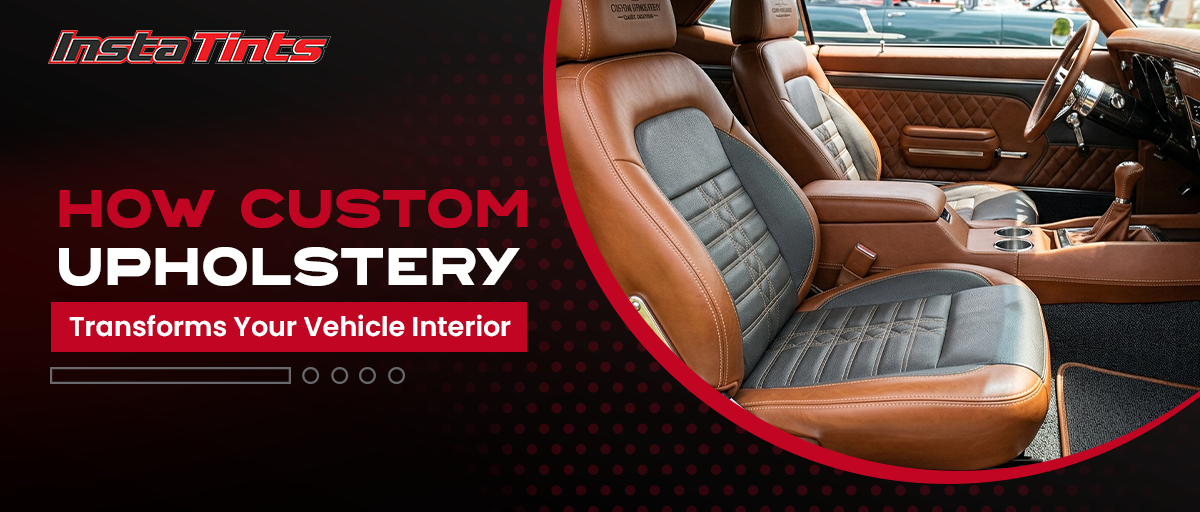
What is this article about? Stock chairs and old fabric don’t have to be forever. This article goes inside a car to see what bespoke upholstery really does and why more drivers are willing to spend money on it.
There’s a specific type of irritation that comes with driving a vehicle you love but can’t tolerate sitting in. The driver’s seat had cracked leather. Fabric that has faded and no amount of cleaning can restore. A central console that is worn at every place your arm touches. However, outside is okay, and the mechanics are good. But every time you get in it, it just doesn’t seem right.
That’s often where the discussion about custom car upholstery begins. And as individuals see what they truly can achieve, the question swiftly shifts from “Should I?” to “Why didn’t I do this sooner?”
What Custom Car Upholstery Really Changes
When thinking about car upholstery, people often focus only on seats. However, it’s beyond that! A thorough interior redesign may include:
- Front and rear seats – fabric, leather or artificial leather in any colour or texture
- Door panels – whole panel or inserts and armrests only
- Centre console and armrest – the most worn parts of any car, normally
- Headliner – lining on the ceiling, fades and sags more than expected
- Dash cushioning and trim – particularly for older cars, when the original material has hardened or broken
- Carpeting – complete replacement or colour-matched overlays
- Sunshades and pillar trimmings
It relies on the vehicle’s demands and the owner’s wishes. When the rest of the interior is in good shape, a partial update of the high-wear sections may be just as effective as a complete overhaul.
Why Vehicle Upholstery Fails Over Time
Factory automotive upholstery is created to a price and schedule. It is meant to appear attractive at the point of sale and to last a warranty term. After that, you are on your own. UV rays dry out leather and break it at the seat bolsters, which is precisely where you apply the greatest pressure when getting in and out. Fabric eats everything. Sweat, food, pet hair, dampness from wet gear. Factory seat stitching usually isn’t reinforced at stress points, which is why the seams almost always break first on the driver’s seat.
Custom car upholstery starts with superior materials and may be made precisely for how the vehicle is actually used, i.e., whether that’s hard everyday driving, family use, or something more in the realm of a weekend show build.
The Importance of Material Choices
Material choice makes all the difference to the way the inside looks, feels and performs:
- Full grain leather – the highest quality, matures wonderfully, needs care, suitable for luxury constructions
- Synthetic leather (PU/vinyl) – more resistant to moisture and UV, simpler to clean, better for families and everyday drivers
- Alcantara/suede – smooth, gripping, premium feel, prevalent in performance and sports interiors
- Performance fabric – sturdy, breathable, colour fast, suitable for trucks and working vehicles
- Two-tone mixes – Mixing materials or colours across panels to provide a really personalized design
Changes The Feels, Not Just Looks
This is the part that is difficult to explain unless you experience it. Driving a car with well-done upholstery – material that feels good to the touch, with tight, even stitching and surfaces that don’t creak or move – transforms how every drive feels. It is quieter. It looks more sturdy. The automobile is more costly than it seems, in the nicest conceivable manner.
It Also Preserves the Value
A vehicle with a clean, personalized inside is a very different proposition come resale time. Buyers notice right away. Cracked seats and damaged door panels are among the quickest ways to lose ground in negotiations when selling. A quality refresh of your car’s upholstery can maintain its value and sometimes turn the resale debate in your favour.
When To Do It?
Truthfully, sooner than most expect. A much bigger task when the chairs are severely damaged, or the cloth is discoloured through. Catching deterioration early – a few cracks emerging on the bolster, some fading on the door panels – equals less material replacement and a cleaner outcome. However, interiors in bad shape may be restored. Vehicle upholstery services at the professional level may range from mild refreshing to comprehensive ground-up rebuilding.
Final Words
Stock interiors are a starting point, not a limitation. Whether you are bringing a ten-year-old car back to life or making a newer one really your own, bespoke upholstery is one of the most high-impact improvements you can make to a vehicle without messing with its appearance. Come in to Insta Tints Canada, and we shall discuss what’s feasible on your particular automobile; there are more possibilities than most people think.
FAQ
1. How long does a bespoke upholstery project take?
Depending on the scope. A seat may be reclaimed in a day. A complete interior, including headliner, door panels, and carpets, usually takes two to four days.
2. Is bespoke upholstery only for elderly or upscale vehicles?
Not even in the ballpark. Custom automobile upholstery may be for any car – daily drives, pickups, SUVs, and newer vehicles when the owner merely wants something different from the factory finish.
3. Can I choose any colour combination?
Yes. Colour, material, stitch pattern, and finish may all be tailored. Depending on the material you choose, you may pick from two-tone constructions, contrast stitching, and embossed designs.
4. Will the new upholstery affect resale value?
Positively, if done well. A clean, professionally done interior update will make the vehicle more desirable at resale and give you more negotiating power.
5. Will the new upholstery match my dash and trim?
As part of the design process, a professional upholstery company will colour-match or complement the existing interior pieces so that everything reads as purposeful rather than mismatched.