
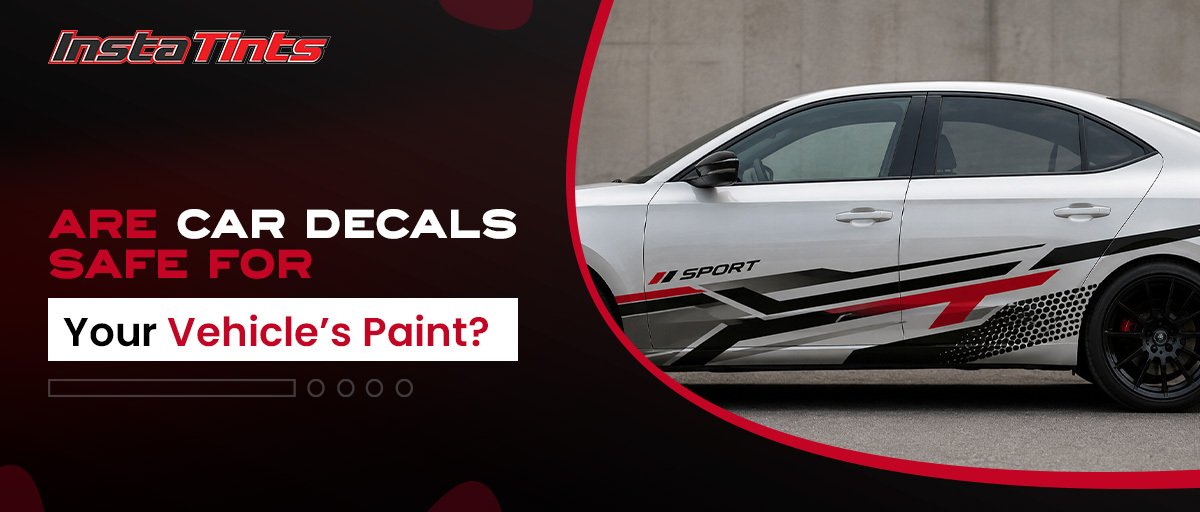
What is the article about? Car decals look excellent on vehicles. But what exactly are they doing to the paint beneath? This piece delves into the true answer and the factors that determine whether removal goes smoothly or creates a mess.
It is one of the first things people ask before deciding on a decal. What happens to the paint when it peels off? Will there be any residue? Will the colour below differ from that of the panels that were not covered? Fair questions, and the honest answer is more comforting than most people assume, with a few qualifiers to consider before anything is installed in the vehicle.
The Short Answer
Quality vinyl decals, when applied and removed properly, are safe for factory paint in good condition. The glue used in professional-grade automotive vinyl is specifically designed for car surfaces and is strong enough to withstand weather, washing, and driving conditions while not damaging the clear coat when properly removed.
Nonetheless, a few factors influence whether removal proceeds well or creates issues. Understanding them early on saves a lot of frustration later.
What Exactly Determines Paint Safety
Quality Of The Vinyl
Cheap film uses adhesives that are not designed for automobile clear coat. Over time, particularly in hot conditions, these adhesives may bond more firmly than intended, making removal difficult and occasionally destructive. Professional-grade vinyl for autographics and custom decals is a whole distinct product. It is designed to remove the adhesive cleanly, without leaving any residue.
Condition Of The Paint Underneath
Car decals are easily removed from new, factory-baked clear coat. Decals on damaged paint, whether it’s oxidized, badly resprayed, or flaking, might pull surface material when removed. The decal is not causing the injury; rather, it reveals preexisting damage. It is worth having an expert inspect the paint before applying a huge decal.
Life Of A Decal On The Car
A decal removed within its specified lifetime, normally five to seven years for excellent vinyl, comes off far more smoothly than one left on beyond that time. Heat cycles and UV exposure steadily improve the adhesive bond over time. The longer it remains, the more effort is required to remove it.
Method Of Decal Removal
Heat weakens the adhesive, allowing the film to detach cleanly. The risk of paint removal increases when it is done cold and dry, without heat. This is the single most significant reason for professional removal. Not because the decal is inherently unsafe, but because the procedure makes all the difference.
Does the Paint Underneath Look Different After Removal?
Yes, that does happen on occasion, but it is not harmful. This is known as differential fading. During the decal’s application, the underlying paint was UV-protected. The surrounding paint, however, was not. Depending on how long the decal has been there and how much sun exposure the vehicle receives, there may be a noticeable change in colour intensity between the covered and uncovered sections.
However, this is temporary! The protected paint is in better condition than the surrounding paint. A little polish or detail session usually evens things out. In other situations, the discrepancy resolves itself after a few weeks of equal UV exposure.
One of the underrated advantages of cars with decals is that the paint underneath a long-term decal typically seems substantially fresher than the surrounding panels when it is ultimately revealed.
What About The Adhesive Residue?
With professional-grade vinyl and the correct cleanup procedure, residue should be minimal to nonexistent. Any minor quantity left behind may be removed with a residue remover or isopropyl alcohol applied gently to the damaged area – a common detailing method that does not need any special equipment.
Sticky, persistent residue that refuses to budge is usually the result of one of two things: a low-quality adhesive that was not designed for clean release, or an attempt to remove a decal without heat after it has been on the vehicle for a long time.
How to Ensure a Smooth Removal Process
Here are several things that may help:
- Don’t leave decals on for longer than they should be.
- Heat should be used throughout the removal process.
- Begin at the borders and work gently.
- Apply a residue remover.
- Book a professional removal service for huge graphics.
Should You Invest In Car Decals?
Completely! The paint safety worry around decals is mostly a quality and technique issue, rather than an inherent danger with the product itself. Cars with decals that have been properly applied and removed exhibit no long-term paint damage. Often, the underlying paint is in better condition than the surrounding material.
Every sticker installation at Insta Tints Canada uses professional-grade vinyl, and every removal is done so that the paint below remains perfectly intact. Come in and chat about what you want on the automobile; the finish below will suffice.
FAQs
1. Will a vehicle decal scratch fresh paint?
Not with high-quality vinyl and adequate removal techniques. A well-maintained factory-baked clear coat can easily accommodate automotive-grade decals.
2. Can I remove a decal myself without harming the paint?
Small decals, sure; use a heat gun and work carefully from the edges. Large autographics should be handled properly to eliminate paint hazards across a wider surface area.
3. How long can a decal be applied before it gets difficult to remove?
The majority of professional-grade vinyl is meant to last five to seven years. Beyond that, the adhesive bond strengthens, and removal gets more difficult.
4. What if there is residue left after the decal is removed?
A small amount of residue is normal and may be removed with isopropyl alcohol or a specialist adhesive remover. Stubborn residue generally indicates that the glue was not automotive-grade or that the removal was done without heat.
5. Does the paint behind a decal fade differently from the rest of the vehicle?
It’s generally better to keep it, since it’s UV-protected, but the surrounding paint isn’t. Following removal, a simple polish usually evens up any noticeable differences.