
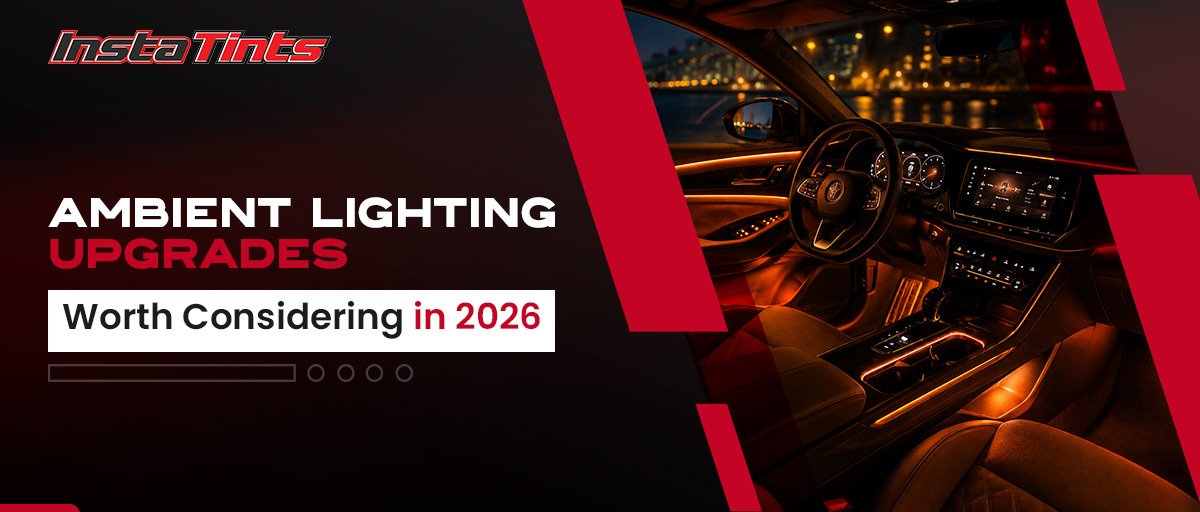
What’s the article about? Today’s ambient lighting is far more advanced than the old LED strips installed in dashboards. This lays out the improvements that are genuinely worth considering in 2026 and what makes a decent install a fantastic one.
Multi-zone car ambient lighting was a luxury-car option a few years ago, or something you cobbled together with a DIY kit and hoped for the best. Neither choice seemed exactly appropriate to most drivers. That’s changed! The technology has developed, the choices are much broader, and the difference between aftermarket and factory-fitted has narrowed to nigh-on nothing with expert installation.
If you have been sitting on the fence or simply haven’t checked it out in a while, this is what’s really worth thinking about right now.
Multi Zone RGB Systems
This is the update that has created the most chatter in 2026. With multi-zone RGB systems, you can run different portions of the interior independently, so the lighting isn’t just a single, flat hue across the entire space. You may assign various colours to separate zones, or sync them to create a single flowing effect.
There is a big difference between single-zone and multi-zone vehicle interior lighting. Single-zone is ok, but Multi-zone seems to have been designed for the automobile rather than bolted onto it. Ever sat in a new Mercedes or BMW and thought, “Why do the interior car lights seem so thoughtfully designed?” That’s multi-zone illumination at work!
Acrylic Light Guide Systems
One disadvantage of standard LED strips is that it is difficult to avoid hotspots. You can see each individual LED as a point of light, rather than a smooth, equal wash of light. Acrylic light guide systems fix this. The light passes through an acrylic diffuser to even it out, so there are no hotspots, and it gives the kind of smooth, continuous lighting that really looks like it was factory-installed.
It’s one of the most obvious tech upgrades in vehicle interior lighting in the past couple of years, and it’s what distinguishes the luxury end of the aftermarket from the inexpensive end. If the finish is important to you, and it should be, this is something special to inquire about.
Reactive Light & Music Sync
Music-reactive car ambient lighting has been around for a while, but the quality has improved quite a bit. Earlier versions were rudimentary, lights flashing vaguely to the bass. There are systems now where microphones are integrated, and processing is sensitive enough to react to rhythm, not just loudness. The impact on car door lights and footwell zones at night, when driving with music playing, is really amazing and one of those things that is impossible to explain without experiencing it.
Not everyone wants reactive lighting all the time, and most decent systems allow you to choose among static colour, dynamic effects, and music sync depending on what you are doing with the vehicle.
Fibre Optic Trim Integration
Fibre-optic ambient lighting is as close as you can get to what premium manufacturers use at the factory level. The light strips are no longer linked to the trim panels; instead, fibre-optic cables are integrated into or behind the trim, creating a glow that seems to emanate from the panel rather than from an external source. The effect is seamless in a way no surface-mounted light strip can quite match.
They take longer to install properly and are more expensive than typical LED systems, but for drivers who want the interior to look fully untouched like the interior car lights that came with the vehicle, fibre-optic integration is the way to go.
Wireless Systems for Easier Installation
Wireless ambient lighting will be sufficiently advanced in 2026 to be a viable choice for certain applications. Wireless systems do not need wires to be run throughout the cabin. This is especially useful for movable or semi-permanent installations, such as in leased cars, when a permanent installation is not possible.
The trade-off is brightness and consistency vs hardwired configurations. Wired is still the superior play if you want a complete, permanent setup. But for drivers looking for an update without tinkering with the car’s electrical system, wireless options have dramatically reduced the gap.
What To Ask For When Visiting Insta Tints Canada Studio
Technology is just half of the story. The installer decides whether any of these systems are a true improvement or an afterthought. Hidden wiring, intentional zone placement, smooth integration with the door panels and footwell regions: these are what make car accessories in Canada worth the investment rather than something you are already doubting a week later.
Insta Tints Canada installs ambient lighting that looks like it belongs in the automobile. That means accurate positioning, clear routing and a result that stands up to years of everyday usage, not just the first week.
Conclusion
Ambient illumination is an excellent idea at this time. 2026 is a really nice time. The technology is sophisticated, the choices are many, and skilled installation has rendered the factory-vs-aftermarket divide nearly moot. If your automobile cabin seems to be lacking something at night, it probably is the interior light!
Frequently Asked Questions
1. What is the largest ambient lighting upgrade for 2026?
Acrylic light guidance systems and multi-zone RGB control are two of the most visible advancements over past generations, offering smoother light output and significantly more precise control over various cabin zones.
2. Is music-sync lighting a distraction when driving?
Not when done right. Good systems react to rhythm as well as loudness, and most will allow you to switch to a static hue when you want something more subdued.
3. How is fibre optic lighting different from traditional LED strips?
Fibre optic creates a light that looks to emanate from inside the trim panel, not something stuck on the surface. The finished product appears a lot more factory-fit.
4. When driving, can I alter the illumination without having to use my phone?
Most excellent systems incorporate app control and a physical remote or controller near the steering wheel. You shouldn’t have to launch an app to change anything while you are driving.
5. Does the kind of lighting system impact battery life?
Today’s LED technologies all use very little electricity. If connected correctly and using an ignition-switched circuit, they operate only while the vehicle is on; therefore, battery waste isn’t a big concern.