
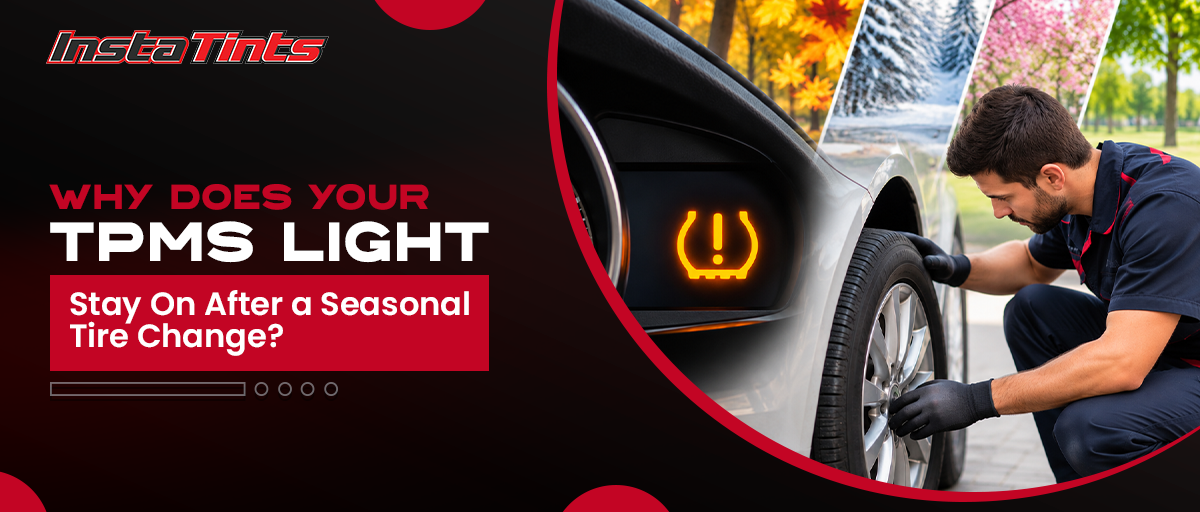
What’s the article about? Learn why your TPMS warning light stays on after a seasonal tire change, from incorrect tire pressure and sensor issues to reset requirements and battery failure.
A seasonal tire change should get your vehicle ready for changing road conditions, not leave you wondering why the TPMS warning light is still on. If the Tire Pressure Monitoring System (TPMS) light remains illuminated after switching to winter or summer tires, it may indicate a sensor problem, incorrect tire pressure, or a system that needs to be reset. Before ignoring the warning, it is essential to determine what is causing it. Here are five common reasons why your TPMS light may remain on after a tire change service, and what you can do about it.
Are Your New Tires Inflated to the Correct Pressure?
Incorrect tire pressure is one of the most common causes of a TPMS warning. During a seasonal tire change, technicians may install tires that have been in storage for several months. Their pressure may have decreased during storage. Cold temperatures can also lower tire pressure. Tire pressure usually drops by about 1 PSI for every 5°C drop in temperature.
What Should You Do? Check all four tires when they are cold and inflate them to the pressure recommended on your vehicle’s door jamb sticker, not the maximum pressure printed on the tire sidewall.
Does Your Vehicle Need a TPMS Reset or Relearn?
Some vehicles automatically recognize their tire pressure sensors, while others require a manual TPMS reset or relearn procedure following a seasonal tire change. If the system is unable to identify the sensors in their new wheel positions, the warning light may remain highlighted even when the tire pressure is accurate.
What Should You Do? Follow your vehicle’s reset instructions. Depending on the vehicle, this could entail driving a short distance, navigating the dashboard menu, or performing a sensor relearn with a specialized tool.
Are Your Winter Tires Compatible With TPMS Sensors?
Not all aftermarket wheel and tire packages include TPMS sensors. If your winter tire set includes wheels without sensors, your vehicle may display a warning message throughout the season. Some vehicles also require specific sensor frequencies or sensor programming.
What Should You Do? Before your next winter tire change, make sure your replacement wheels have compatible TPMS sensors installed and properly programmed.
Could a TPMS Sensor Battery Be Dead?
TPMS sensors have small batteries that can last for 5-10 years, depending on usage and conditions. When a battery weakens or fails, the sensor may stop transmitting pressure data. A seasonal tire change may reveal a sensor that is nearing the end of its service life.
What Should You Do? Have a technician scan the sensors for communication issues or low battery warnings. A sensor with a depleted battery usually requires replacement.
Is Your TPMS Light Flashing Instead of Staying Solid?
The behaviour of your warning light can help you identify the problem.
Solid TPMS light: This typically indicates that one or more tires have low pressure.
Flashing TPMS Light: Generally implies a sensor or system malfunction. Many vehicles’ lights flash briefly before remaining illuminated.
However, warning patterns differ by manufacturer, so always refer to your owner’s manual.
When Should You Get Your TPMS Checked?
If the TPMS warning remains after checking tire pressure and completing the reset procedure, have the system inspected. Driving with an unresolved warning may prevent you from noticing a true loss of tire pressure.
If you need a winter tire change Toronto, Mississauga, Brampton, Hamilton, or Scarborough, make sure to include a TPMS compatibility and pressure check.
Book your seasonal tire change with Insta Tints and have your tire pressure monitoring system checked before your next drive.
FAQs
- How long does it take for the TPMS light to reset following a tire change service?
Depending on the vehicle, it may reset after 10-30 minutes of driving or require manual relearn.
- Can I drive while the TPMS light is on?
You can, but make sure to check the tire pressure immediately. An unresolved warning may indicate a leak or sensor malfunction.
- Do winter tires require separate TPMS sensors?
If your vehicle uses direct TPMS, your winter wheel set should have sensors that are compatible.
- Does cold weather activate the TPMS warning?
Yes. Falling temperatures can lower tire pressure and activate the warning light.
- Should TPMS sensors be replaced with seasonal tires?
Not necessarily. They should be inspected and replaced if they are damaged, incompatible, or their batteries have died.